Sunday, 20 March 2011

Traditional Media Join the Dots

New social media in the form of blogs, Facebook, Twitter, YouTube and others are unfolding as important primary sources of news and information on life in Trinidad and Tobago.

They have played a vital role in unveiling important information on a number of recent, high-impact news stories. These have included issues such as the Reshmi Ramnarine assignment and developments linked to the work of the Tourism Development Company (TDC).

International media development experts are beginning to agree that while social media have been able to identify the “dots” on the social and political landscape, traditional, mainstream media are best placed to join those dots.

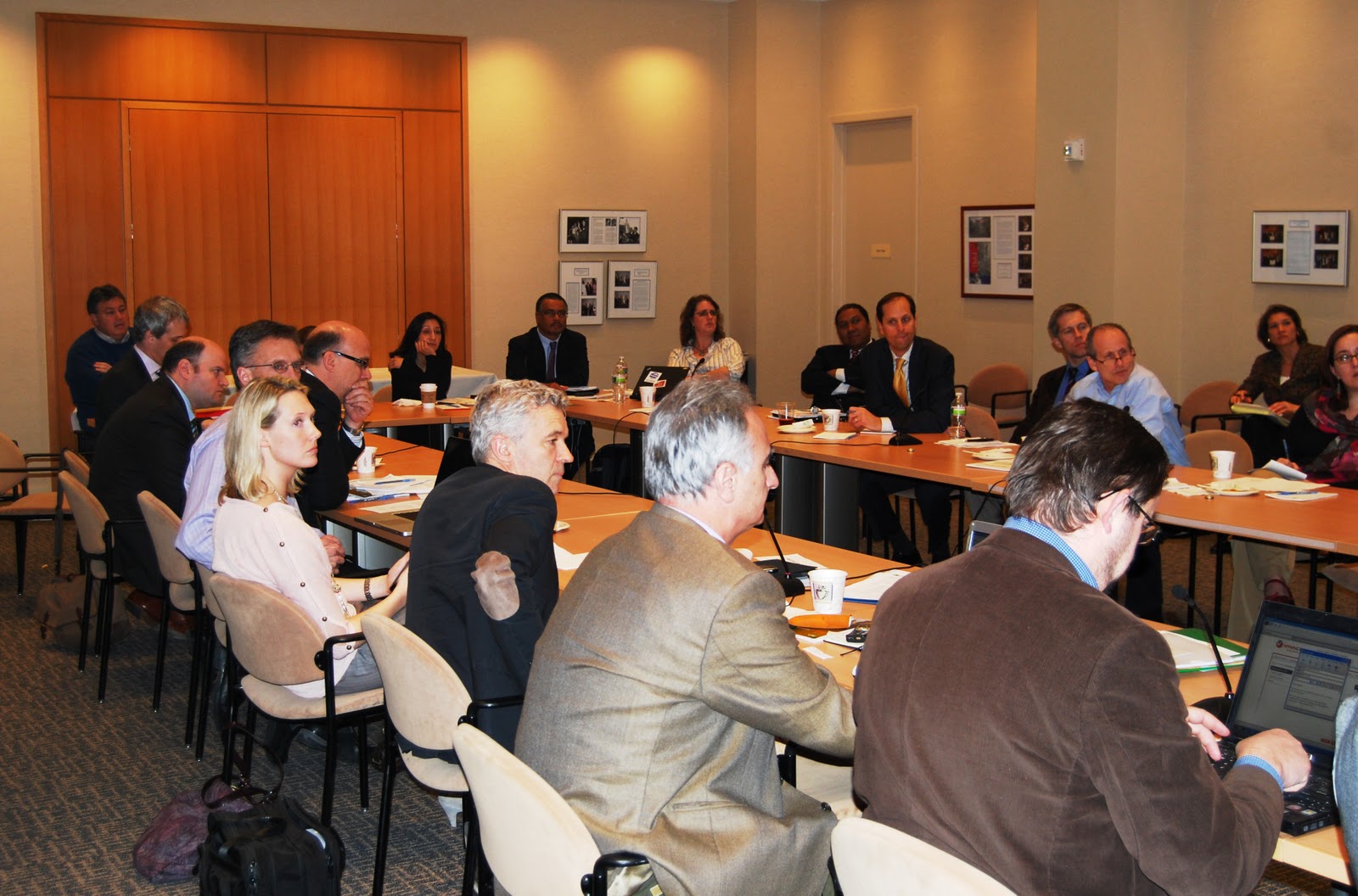
A discussion convened by the Washington-based Center for International Media Assistance (CIMA) and the Global Forum for Media Development (GFMD) last week explored the issue.

The context of the discussion was the pervasive and effective use of social media during what James Deane of the BBC World Service Trust, described as “democratic outbursts” in North Africa and the Middle East.

Most speakers suggested that the “new” media can be used appropriately as content in mainstream media but that more needed to be done to establish the bona fides of the new platforms.

Luis Botello of the International Center for Journalists (ICFJ) for example said the challenge of social media usage resided in being able to sift through a growing mass of citizen-generated content.

His said his own organisation, which promotes journalistic development and press freedom globally, continued to ask hard questions about “who gets to be trained” in order to promote greater credible use of social media as a source of news and information.

Deane suggested it might well be a case where the benchmarks of performance by the bloggers and other social media users would be the extent to which there is “self discipline” and a “commitment to peace” on their part.

He said it was clear “we will need to go beyond what we have seen in the Middle East” since both repressive governments and organised criminal networks are equally capable of using the new media to their advantage as propaganda tools.

Veet Vivarta, Executive Secretary of the Brazilian News Agency for Children's Rights (ANDI), argued that whatever the new media brought to the table, “old style journalism” was still “a very important tool” in telling the stories of societies.

He pointed to the reliance of the “old tools” on values including accountability and transparency.
The debate is however tempered by the realisation that Deane’s “democratic outbursts” are essentially the product of social movements with tentacles that extend way beyond the reach of the new media.

It was a point stressed by A.S. Panneerselvan of Panos South Asia and India who said it was the “power of Tahrir Square” in Egypt that brought the Mubarak regime to its knees and not the influence of the new media. He said a lot of time was being spent on looking at something that was simply the expression of a much deeper-seated process taking place throughout the globe.

Gabriel Baglo of the International Federation of Journalists (IFJ) operations in Senegal said, for example, that “what is happening in North Africa today is what happened 20 years ago in the rest of Africa.”

He said it was important that the momentum of the movements in North Africa and the Middle East expand since there was a recognisable “democratic recession” throughout the African continent. A similar comment was made about democratic “roll backs” in some parts of Europe including countries such as Hungary.

There was general agreement that the facilitative role of the social media was becoming increasingly difficult to reverse since, in most instances, digital media are an integral part of the digital economy.

This made it difficult for repressive governments to tinker with free expression in the new media without hampering the greater use of online technology in the development process.

The general conclusion was that the social media are not only here to stay, but will continue to be an important source of potentially revolutionary change, reinforced and validated by old fashioned newspapers, television screens and radios.


* Originally published in the (Trinidad) Sunday Guardian - http://www.guardian.co.tt/news/2011/03/20/social-media-takes-place-alongside-old-media

Saturday, 29 January 2011

Impending Closure of BBC Caribbean Service

January 25, 2011 - The Association of Caribbean Media Workers (ACM) is saddened by the announcement by the British Broadcasting Corporation that its popular Caribbean Service is to be closed.

The ACM wishes to pay tribute to the West Indian men and women and their British counterparts who strove for more than 40 years, and more recently, in more than 15 years of unbroken service to present a balanced, comprehensive and intelligent picture of life in the Caribbean. The Caribbean Service has also been an invaluable source of insightful analyses and commentaries on the effect of world economics and politics on the region.

While the BBC has created several incarnations of the BBC Caribbean Service going back to the Second World War, the ACM honours the contribution of the late Hugh Crosskill, who as editor of the modern Caribbean Service shaped the unit into a significant source of regional radio news. We pay special tribute to the fine work of his long-standing successor, Debbie Ransome, a veteran journalist who increased the Caribbean Service's output and made it an essential part of radio listening diets across the region.

The Caribbean Service's journalists and producers deserve the highest commendation. They also deserve the unequivocal assurance that their names -household names for thousands of Caribbean people - will not be lost to egional broadcasting. The ACM believes that this is an opportunity for bold, collective ction by Caribbean media owners and managers to ensure that the careers of en and women who contributed significantly to regional information and nderstanding can continue.

It is in this regard that the ACM calls on the Caribbean Media Corporation and the Caribbean Broadcasting nion, whose mandates and functions mirror that of the Caribbean Service, to move immediately to create a viable alternative. The CMC, especially, which has inherited the Caribbean News Agency (CANA), a trusted and independent organisation that gave so many of the BBC Caribbean staff their start, must now seize the opportunity to ensure that the region does not skip a beat in making the transition from a London-based Caribbean news organisation to a Caribbean-based news agency.

While the ACM applauds the sterling work of its colleagues in London, it has long believed that only a truly Caribbean institution that is to the region what the BBC has been to the world can be a vital part of the communications mix in a Caribbean single economy and a Caribbean single marketplace of ideas.

The Caribbean needs a distinctive service of high quality news and information that is collected, distilled and explained by some of its veteran journalists, not a hodge-podge of duplicated copy from national media houses.

Let it not be said that in a moment of adversity, the Caribbean media failed to shed considerations of parochialism and profit to create a trustworthy source of Caribbean news and information.

It would be a sad commentary on the fruit of regional independence and integration and the greatest possible disservice to the people of this region if the Caribbean broadcast media, who do possess the resources, lack the will to do what the moment demands of them.

Sunday, 9 January 2011

Organising Caribbean Journalists - The Journey

After nine years of existence, the Association of Caribbean MediaWorkers has defied the doubting Thomases (and there have been many) and has been able to engage the multi-faceted tasks of networking journalists, promoting professional development in the Caribbean media and holding fast to the principles of free expression and a free press.

This has not been an easy journey. For one, we have attempted to accomplish our tasks largely through the volunteer efforts of resourced-starved national associations and focal points and the vision of a group of elected individuals functioning at the regional level and who serve on our executive board.

This, though, is not exactly the right model. Our counterparts who form part of the Global Forum for Media Development and the International Freedom of Expressions Exchange are both professionally outfitted and also receive the regular support of international media development agencies. Perhaps in the Caribbean we have too successfully sold our image as a tropical paradise to many who continue to believe that the threats to our freedom are imagined, if not over-stated and that “we cool”.

However, because of the partnerships we have forged through international partners who are finally getting the message, the ACM has been able to complete assignments over the years that have included a journalism mentoring programme, more than 20 training workshops and projects, collaboration on the publication of a handbook on covering climate change and production of our handbook on covering elections in the Caribbean.

The ACM serves on the steering committees of the Latin American and Caribbean operations of IFEX and GFMD and sits on the IT Sub-Committee of CARICOM. We also have working relations with the International Press Institute, the Committee to Protect Journalists and the Office of the Special Rapporteur for Freedom of Expression in the Americas.

Our agenda is transparent and obvious. It is what I often describe as the “freedom perspective” – meaning that we need to maintain constant vigil over freedoms and rights that cost us dearly through our experience of slavery, indentureship and colonialism. It is incredible that in a part of this globe characterised in the past by these phenomena on such a large scale, human rights NGOs are so sparse and, where they exist, are of questionable value in the context of the right to maintain hard-won freedoms – freedom of expression in particular.

Such a task has fallen to those of us who believe this is something worth fighting for, however much it challenges the fashionable instinct to opt for personal privilege over the collective good.

This, of course, is not altogether an altruistic aspiration. Media workers insist on press freedom so that media enterprises flourish and grow and create environments in which we thrive and achieve professional rewards and satisfaction.

Press freedom calls on those who wield economic and political power to account for their decisions and their actions. It not only pursues the facts, but relishes the truth. It is an important pillar upon which we can build our true independence.

This, perhaps, is not the season to dwell too much on these lofty, esoteric matters, but it is certainly the time for us to focus on where we go from here. It’s almost like that star more than 2,000 years ago when those who believed in something came up against those who did not believe. They fixed their gaze upon that star and never gave up.

It might be as we approach 2011, we are being called upon to re-dedicate ourselves to a cause that is not always popular - one that costs us money, time and, sometimes, friends.


Saturday, 25 December 2010

Photo Blog

Spent some down time today updating my Photo Blog. Some of it recent. But I do include some shots from 2003 in Fiji.

Many things to write about as we look back at 2010 and forward to 2011. Let's see how things go.

Tuesday, 14 December 2010

Finding Neruda


Toes hurt. It is misleading to say Baquedano station takes you to this place. Lost in the translation are the long, summer streets of kissing school girls and boys with cold, oversized Escudo cervezas just right for the piss of mountain horses.

I have come here to Neruda’s blue wall along “Constitution” – what a name for the street on which he lived and wrote of rules to break under the heaving weight of love.

Mikhail on my mind as I pass the hippie murals. A “crapaud foot”, upper case tribute to the 35th year since the poet’s passing and a red stony climb to the blue wall.

I had realised two streets before, near the drunken guy with the credit card thingy in his loose hand, that the hapless, tag-along Nikon over my shoulder was as cardless as the endangered thingy.

Hearts do stop and start again … faster.

Shit.

Here I was at the shrine. It is important that you not only touch and feel and smell, but capture with both hearts and take with you a piece of this place. Hold like arms to a newborn.

So, back again I go. Tomorrow, if it ever comes.

Tuesday, 16 November 2010

Voices Hoarse From Empty Laughter

I live in a place where grandfathers and grandmothers relate stories told to them by their own grandfathers and grandmothers. In some cases, tales of torturous journeys across the deep dark waters of the Kala Pani are matched by memories of barrack yards cast with the sweat of slaves.

My own maternal grandfather would have, if we had asked him, reminisced about the parched, barefoot schoolyards of Guangzhou, his own engagement of the Kala Pani – and his midnight embrace, many years later, at Ramleela, with little Miss D’Hurieux whose parents told of masters past and present.

This is the place where stories are told. Houdini begat Atilla begat Kitchener begat Rudder and we know much more than we care to remember because they cared to sing and to make music for all time, through the haze of Sawdust Caesars scattered in the wind over time. As empire begat empire begat empire.

Today, it is a place where silence reigns while the fat go hungry and the thin grow angry. A place of plenty, but a place of little. A flag flies on the barren island in the din of empty, metal drums and voices hoarse from empty laughter.

This is the place I call my home. It used to be a place that was my home. Freedom has fled the frame and seeks the shade of the treacherous Manchioneel.

If today the silence grows and prospers and prevails, it would be because we have shut up and let it reign. We, grandparents, are not telling the story anymore. The scores are written for us and we whistle them to no one in particular in the wind.

This, again, is the time for poetry and poets and foolish old men and women with stories to tell. Men and women who have the right to remain silent but who dare not exercise it.

Wednesday, 10 November 2010

Outrage over Firing of Trinidad TV Show Host

On Saturday November 6, the co-host of one of Trinidad and Tobago's more popular morning television talk programmes, Fazeer Mohammed, received a telephone call from the state-owned media network. The caller advised Mr Mohammed that his services were no longer needed at the station because of a "cost-cutting" exercise.

Problem is that on Thursday November 4, Mr Mohammed had been engaged in a heated on-air exchange with Foreign Minister, Dr Suruj Rambachan. During the interview, Dr Rambachan interrupted to ask the host if he had a problem with the fact that the recently-elected Prime Minister, Kamla Persad-Bissessar, was a woman.

Mr Mohammed, a practising Muslim, said his faith did not condone women in leadership positions within the religion.

His sacking is linked to the ensuing exchange, which can be viewed here: http://www.youtube.com/watch?v=UT4fRxhnLes

On November 10, the Trinidad Express published this editorial:


Political interference?

In keeping with its apparently helpless compulsion to shoot itself in the foot, the People's Partnership administration has now wrought an unholy and toxic mess at the State-owned Caribbean New Media Group (CNMG). The firing of talk show host and sports commentator Fazeer Mohammed will not be received as the cost-cutting measure claimed by the company's interim chief executive officer, Ken Ali. Darkest fears will be entertained over what was in the mortar apart from the pestle.

Citizens calling talk shows yesterday, posting comments on the Express website, and discussing the issue elsewhere, have linked the performance of Foreign Affairs Minister Suruj Rambachan, who was a guest on the First Up show last Thursday, with Mr Mohammed's precipitate dismissal two days later. Mr Rambachan, surprisingly assuming the role of the show host he once was, questioned Mr Mohammed on whether, as a Muslim, he had a problem with women leaders.

Displaying more diplomacy than the Foreign Affairs Minister, Mr Mohammed replied that he did not believe in having women in religious leadership, but that he had no problem with a woman as a national leader.

CEO Ali claims that the decision to terminate Mr Mohammed had been made long before that interview. He and the Government will find this line a hard sell. Even if it is true, Minister Rambachan, by his attitude and words, has undermined the Government's free speech bona fides, and the ensuing action can have only destabilising effects at CNMG.

Neither does Mr Ali's claim that Mr Mohammed's firing was a "cost-cutting measure" fly very well. The most effective cuts in cost would be ones which made the CNMG profitable.

Mr Ali may not be aware that, in its former incarnations as Trinidad and Tobago Television (TTT) and the National Broadcasting Network (NBN), the company's books actually went into the black. That success was short-lived, however, in part because political interference by the United National Congress administration undermined viewership. Bending to political pressure always harms media houses which, like banks, must be seen as trustworthy in order to survive. This is so even for privately owned media, as the Guardian newspaper discovered in 1996, when it appeared to be kowtowing to government power.

The Partnership's wielding of the rod of political correction, in its dual capacity of government and proprietor, will further undermine CNMG's professional standing, and potentially cost the station viewers and therefore advertisers. It appears that the new administration, like that under Basdeo Panday, needs to appreciate that the State-owned entity cannot viably subsist as a Government mouthpiece or pawn. Its reason for being remains to serve the interests of all the people, not just People's Partnership partisans.

Cuba - solidarity and silence

On the day this was published in the Trinidad and Tobago Guardian , my country shamelessly voted not to support the resolution, Antigua ...